
Case study: cutting Amazon FBA inspection costs from $3,055 to $1,203 on mixed coat inventory
The problem
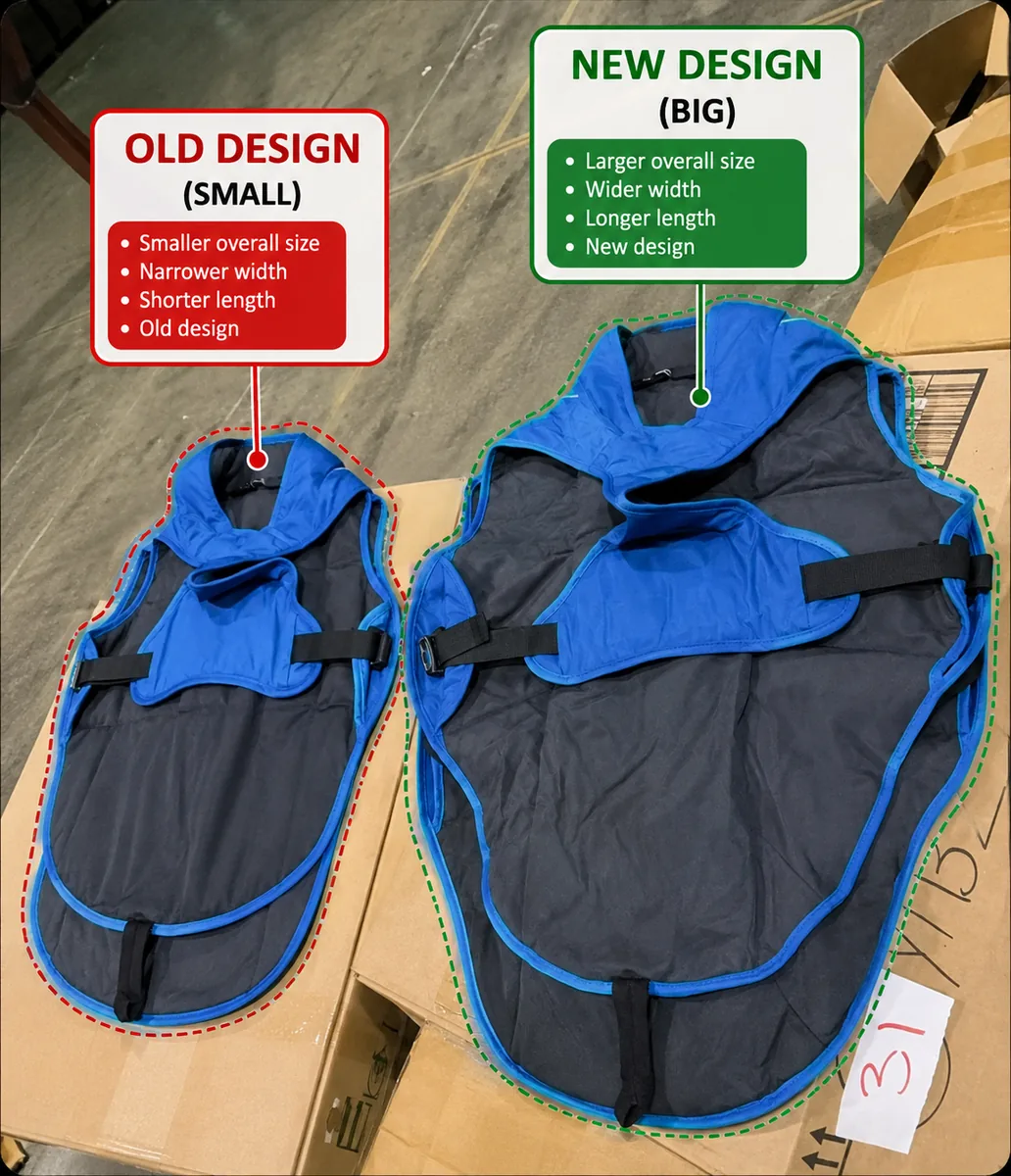
The warehouse had old-design and new-design coats mixed.
The client knew the two designs existed; they just didn't know how much of each was actually in the warehouse anymore. Before the mix happened, we'd already given them a breakdown: old-design units still at Amazon FBA, new-design units in transit. Once everything got mixed at the warehouse, that breakdown was gone. We needed to verify it again from scratch before anything went back into Amazon's system.
What the warehouse proposed
Inspect and separate all 3,819 units. Cost: $0.80 per unit.
3,819 × $0.80 comes out to roughly $3,055 for a full sort.
What we did instead
We didn't take that proposal at face value. Before agreeing to a full inspection, we went through the inventory ourselves, cross-referencing against Amazon's FBA records, and looked at which SKUs and boxes were actually likely to contain old-design units.
A lot of the inventory was already known to be new design based on what Amazon had on file. Paying to inspect it again made no sense.
So we narrowed the ask. Inspect only the specific SKUs and boxes flagged as likely old-design. Skip the rest. That brought the initial inspection request down from 3,819 units to about 1,600.
The result
The warehouse invoice came in at $1,203.20.
Against the estimated $3,055 for a full sort, that's a savings of $1,851.80, and we still got the full picture of old vs. new inventory needed before replenishing Amazon FBA.
What this actually saved
Inspection scope cut from ~3,819 units to ~1,600
~2,219 units never needed inspecting at all
Actual cost: $1,203.20 vs. an estimated $3,055
$1,851.80 saved
Full visibility into old vs. new design inventory going back into Amazon, without paying for the parts that were already known
The takeaway
The warehouse's first offer was to inspect everything. That's the easy answer for them, more units, more billable hours.
Looking at the inventory first, against what Amazon already showed on file, before signing off on labor, is what turned a $3,055 line item into a $1,203 one. Same outcome for the client, a third of the cost.