
Strait of Hormuz container ship attacks: what they mean for ecommerce supply chains
Quick answer: Two Singapore-flagged container ships were hit this week in the Strait of Hormuz, and one sank. All crew members were reported safe. Most Asia-to-US and Asia-to-Europe ecommerce freight doesn't pass through the strait, so direct exposure is limited to Gulf-bound cargo. The bigger risk for most brands is indirect: war risk surcharges, higher freight rates, and tighter schedules arriving right as Q4 peaks.
This news is worth taking seriously, and it's also worth keeping in proportion. Here's what happened, who it touches, and what to do about it this week.
What happened
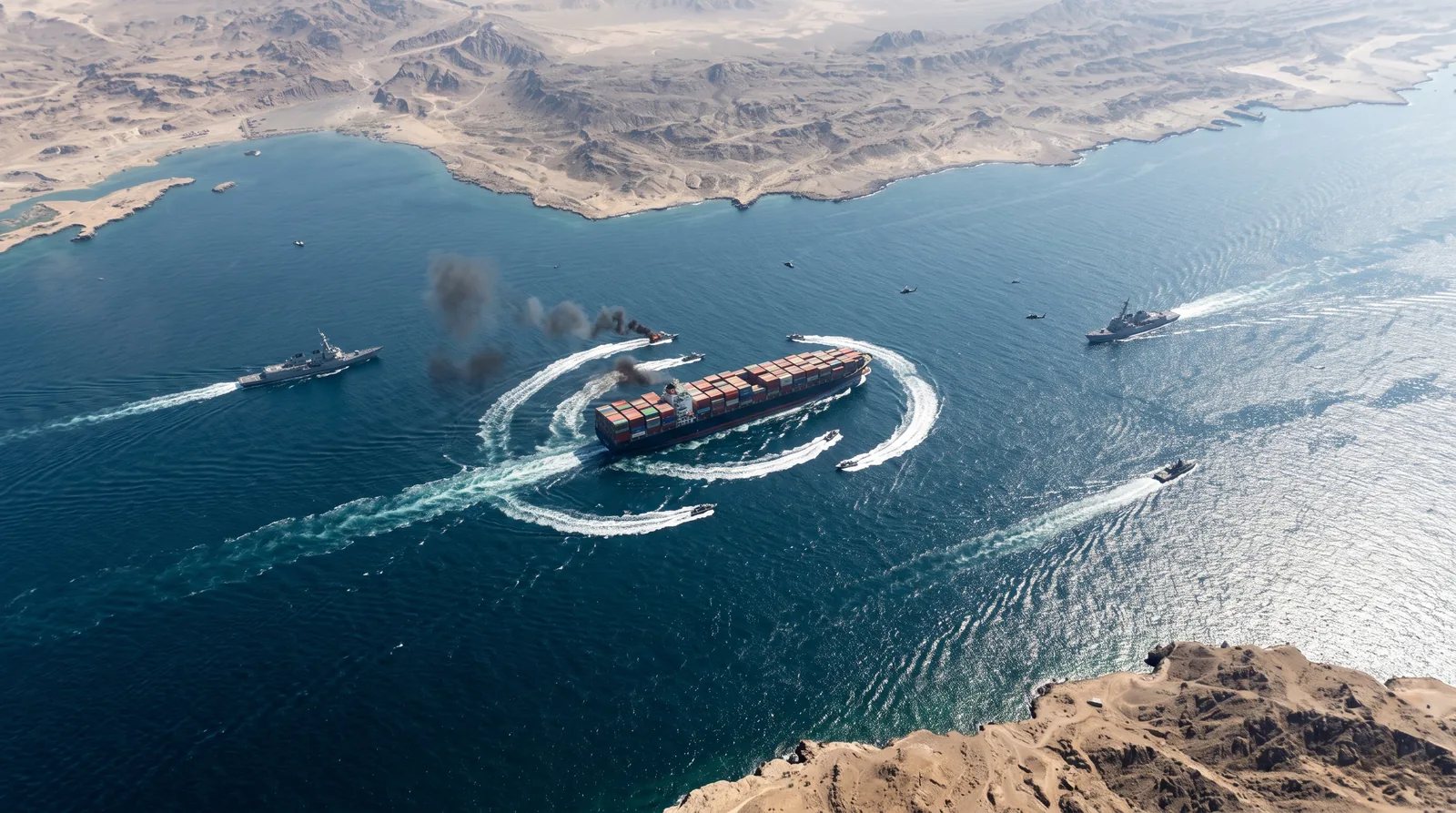
On Tuesday, the container ship GFS Pride sank after being struck by an unknown projectile in the Strait of Hormuz, according to Singapore's Maritime and Port Authority. All 21 crew were evacuated, and no injuries were reported. On Wednesday, a second Singapore-flagged vessel, GFS Giselle, took hull damage from a projectile but reached a safe anchorage with its 22 crew.
Iran's Revolutionary Guards gave a different account. They said a ship hit naval mines while using what they called an "unauthorised" route. The UKMTO, a maritime monitoring agency, also reported two unnamed container ships struck by unknown projectiles on Tuesday, both with minor damage.
The International Maritime Organization counts 106 confirmed incidents involving merchant vessels in the region since the war began in February, with at least 24 seafarers killed. A preliminary agreement to reopen the strait in June collapsed within weeks. The strait normally carries about a fifth of global oil and gas shipments, and crude exports through it have recovered to roughly 80% of pre-war levels, according to Kpler.
Who is directly exposed
Your direct exposure depends on where your cargo actually moves. You're affected now if you sell into Gulf markets, ship through Gulf ports like Jebel Ali for transshipment, or buy materials that travel through the region.
If your freight goes from China or Southeast Asia to US or European ports, it most likely never touches the strait. Ask your forwarder to confirm, in writing, that none of your routings or transshipment legs use Gulf ports.
How it can still reach your costs
Distant conflicts reach ecommerce margins through three channels.
War risk surcharges. Insurers charge much more to cover ships in conflict areas, and carriers pass that on to shippers. Singapore's transport ministry reported in August that war risk cover for Hormuz transits had climbed to 3.5% to 7.5% of a ship's value per transit, up from 0.10% to 0.25% before the conflict.
Freight rates. The same ministry noted that Asia-North Europe container rates were about 120% above pre-conflict levels, though still around 40% below the 2024 Red Sea peak. On Gulf routes, the jump was sharper: Freightos data cited by Indian Transport & Logistics showed Shanghai to Jebel Ali rising from about $1,800 per container in January to over $7,000 by late March.
Network knock-on effects. One analyst said in March that plans for a phased return of container shipping to the Red Sea in 2026 would be shelved. Ships that stay on longer routes probably tighten capacity elsewhere, which can push rates and transit times up on lanes that never touch the strait.
Mid-October timing makes all three worse. Black Friday cutoffs are close, and carriers probably have little slack.
What to do this week
Read your freight contracts. Check how war risk and emergency surcharges are defined, and how much notice carriers must give.
Confirm your cargo insurance. Coverage for war risks varies by policy, so ask your broker what yours includes.
Pad your Q4 lead times. Our Christmas planning guide suggests adding about 21 days to normal transit.
Rebuild your landed cost. Add current surcharges and rerun the numbers using our landed cost guide.
Consider air freight for your best sellers. Use the break-even formula before you commit.
If one supplier or lane carries most of your volume, this is also a good moment to revisit your multi-supplier strategy.
How A2Z Supply Chain handles disruptions like this
No need to panic. We plan around lanes like this one every week, and a surcharge or a longer ETA is manageable with early notice.
Logistics: We check every booking for Gulf routing and transshipment, then rebook through other ports and carriers when needed.
Financial modeling: We rebuild landed cost with current surcharges, so your pricing reflects what freight really costs.
Inventory planning: We raise safety stock on exposed SKUs and pull Q4 orders forward.
Supplier coordination: We shift production timing and split POs between ocean and air for your key products.
Round-the-clock support: Our ops pod watches carrier notices and advisories 24/7 on Slack and email, and flags any delay before it reaches your storefront.
With a buffer in place and a plan made early, most brands will see this as a surcharge line and a slightly longer ETA.