
On demand delivery platform vs parcel carriers: when each one wins
Quick answer: Parcel carriers win on cost per package, national reach, and heavy or bulky orders. An on demand delivery platform wins on speed inside a local radius and on high-value orders where the customer will pay for same-day. Most brands do best running both, with cart rules deciding which option each customer sees.
Brands tend to treat this as a single choice: keep the carrier you use today, or switch to an on demand delivery platform and promise same-day to everyone.
Both approaches fail when they're used on the wrong order. A parcel carrier can't get a gift to a customer by tonight. A gig driver is a poor fit for a package headed across the country. Here's how the two compare on the things that affect margin and customer experience.
Speed: hours versus days
Parcel carriers run hub-and-spoke networks. A package gets picked up, routed to a sorting hub, loaded onto a line-haul truck, and sorted again before final delivery. Even a short ground trip usually takes a day or more.
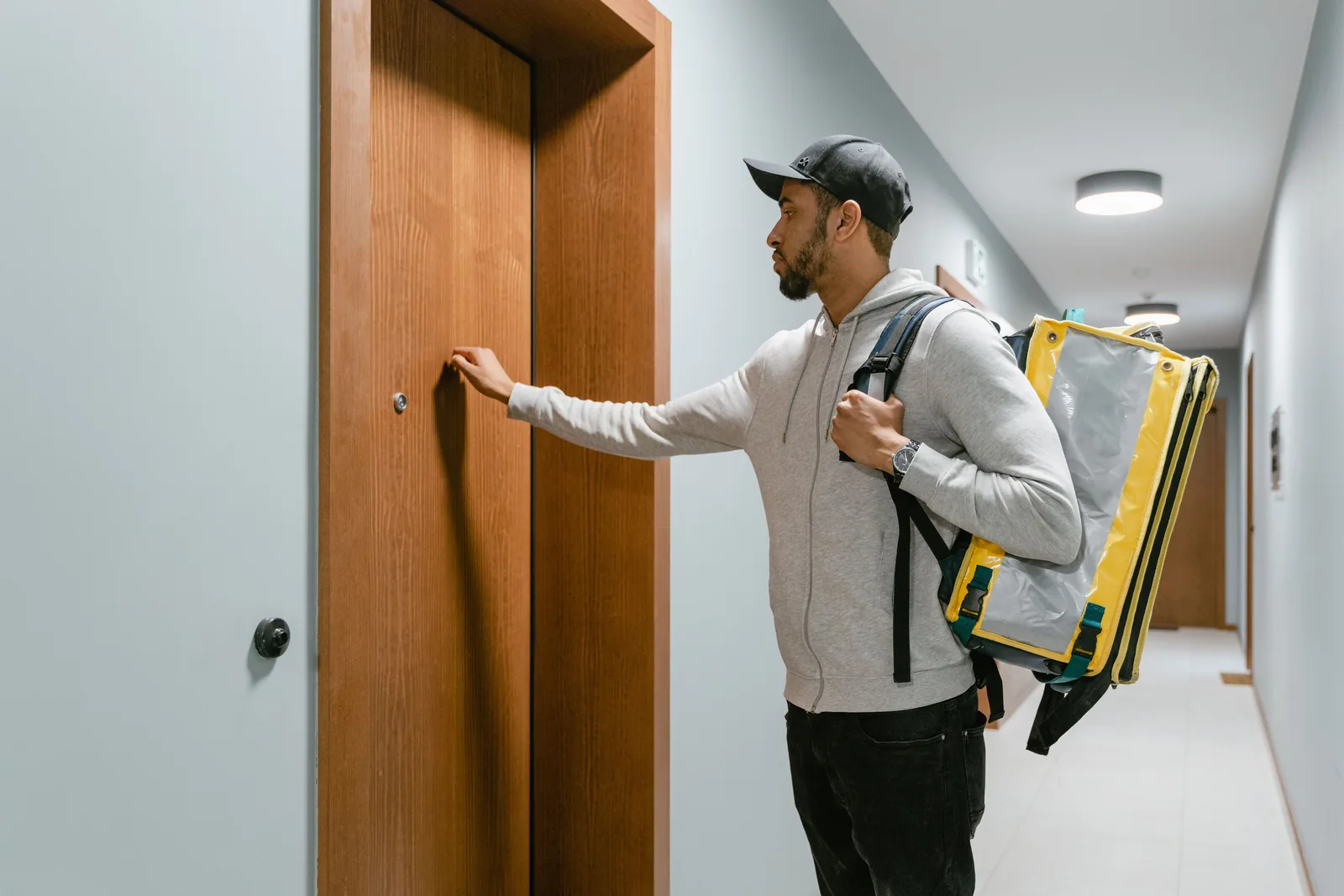
An on demand delivery platform skips the hubs. A driver collects the order from your store or fulfillment node and drives it straight to the customer, often within a couple of hours. If your promise is "by tonight," only the second model can keep it.
Cost: network rates versus per-delivery pricing
Carriers price by weight, size, and zone, and volume discounts improve as you ship more. Cost per package stays low and fairly predictable.
On demand platforms usually price each delivery on distance, and some add fees when demand spikes. As an illustration, a $6 ground label might sit next to a $12 local driver fee. That gap shrinks when the cart is large and the customer pays a delivery charge, and it grows on a $20 order with free shipping. Run the numbers against your margin per order before you decide which orders get which option.
Reach: national coverage versus a local radius
Carriers deliver almost everywhere you sell. On demand platforms work inside a radius around a pickup point, usually measured in miles rather than states, and only where drivers are active.
That makes inventory placement the deciding factor. With no stock in a city node, a driver has nothing to pick up near the customer. We covered how to build those nodes in our final-mile post.
Package size and handling
Carriers take heavy and oversized parcels, with surcharges that you can price in. Many on demand drivers use personal cars, so a bulky item may need a larger vehicle option or may belong with a carrier instead.
Fragile and high-value orders are a closer call. Platforms typically offer photo proof of delivery, and carriers offer declared-value coverage. Check what each pays out on a damaged package.
Reliability and control
Carrier networks come with published cutoff times, tracking, and a standard claims process.
Platform reliability depends on how many drivers are on the road, and that swings with weather, local events, and time of day. Plan a fallback. If no driver accepts a job within a set window, the order should drop back to standard shipping or trigger a message to the customer, so nobody waits on a delivery that isn't coming.
How to split orders between the two
Cart rules do the work here. A same-day option should appear only when all of these are true:
The customer's zip code sits inside the delivery radius of an urban node.
The cart value clears the minimum that covers the driver fee.
Every item is under the weight and size limit for a driver's vehicle.
The items are in stock at that node.
Everything else defaults to your carrier. Add a timeout rule for unaccepted jobs, and test the rules on a weekend before launching to all customers. For help picking the platform itself, see our platform comparison guide.
Run both networks with A2Z Supply Chain
Using two delivery models well takes planning on the supply side as much as the shipping side. A2Z Supply Chain connects both.
Logistics: We set up the carrier and platform connections and write the cart rules that decide which orders go where.
Financial modeling: We compare carrier rates against platform fees on your actual order mix, so same-day only appears where it pays.
Inventory planning: We split stock between your main warehouse and urban nodes, based on where same-day orders come from.
Forecasting: We project local demand by zone, so city nodes don't sell out during a promotion.
Round-the-clock support: Our ops pod works 24/7 on Slack, and we watch for unaccepted jobs and late pickups as they happen.
A carrier and a delivery platform answer different questions. The brands that do well with both usually decide the answer order by order, before the customer reaches checkout.