How to Transition from Spreadsheets to Auto Inventory Management
If you're still tracking e-commerce stock across Excel or Google Sheets, you've probably already felt the ceiling. Manual data entry doesn't just eat up hours. It's the single biggest reason brands oversell, run into stockouts, or end up with cash frozen in deadstock nobody's buying.
Moving to auto inventory management is the point where a brand stops reacting to problems and starts running on data instead. Here's what that shift actually looks like, and how to make it without breaking anything on the way.
What Auto Inventory Management Actually Means
At its core, auto inventory management is software, usually an ERP. That tracks stock, forecasts demand, and triggers reorders on its own. Without someone checking a spreadsheet every morning. It connects your sales channels, warehouses, and suppliers in real time. So the numbers you're looking at are the numbers that are actually true right now, not three hours ago.
Where Spreadsheets Quietly Cost You Money
They're always a little out of date. The moment a flash sale takes off on Shopify, your Amazon FBA numbers are already wrong. Nobody updates a spreadsheet in real time.
One typo, one expensive mistake. Add an extra zero and you've just ordered 10,000 units instead of 1,000. It happens more often than most teams admit.
You find out too late. Manual checks mean you usually notice you're low on stock right around the time you've already run out, not before.
How A2Z Supply Chain's ERP Handles the Transition
The hard part of scaling isn't wanting automation. It's the integration mess of stitching together Shopify, Amazon, and 3PL systems that were never built to talk to each other.
A2Z Supply Chain skips that mess entirely. We don't just advise on your supply chain. We run it, on our own ERP, from the factory floor to the customer's doorstep.
1. Inventory & Demand Planning
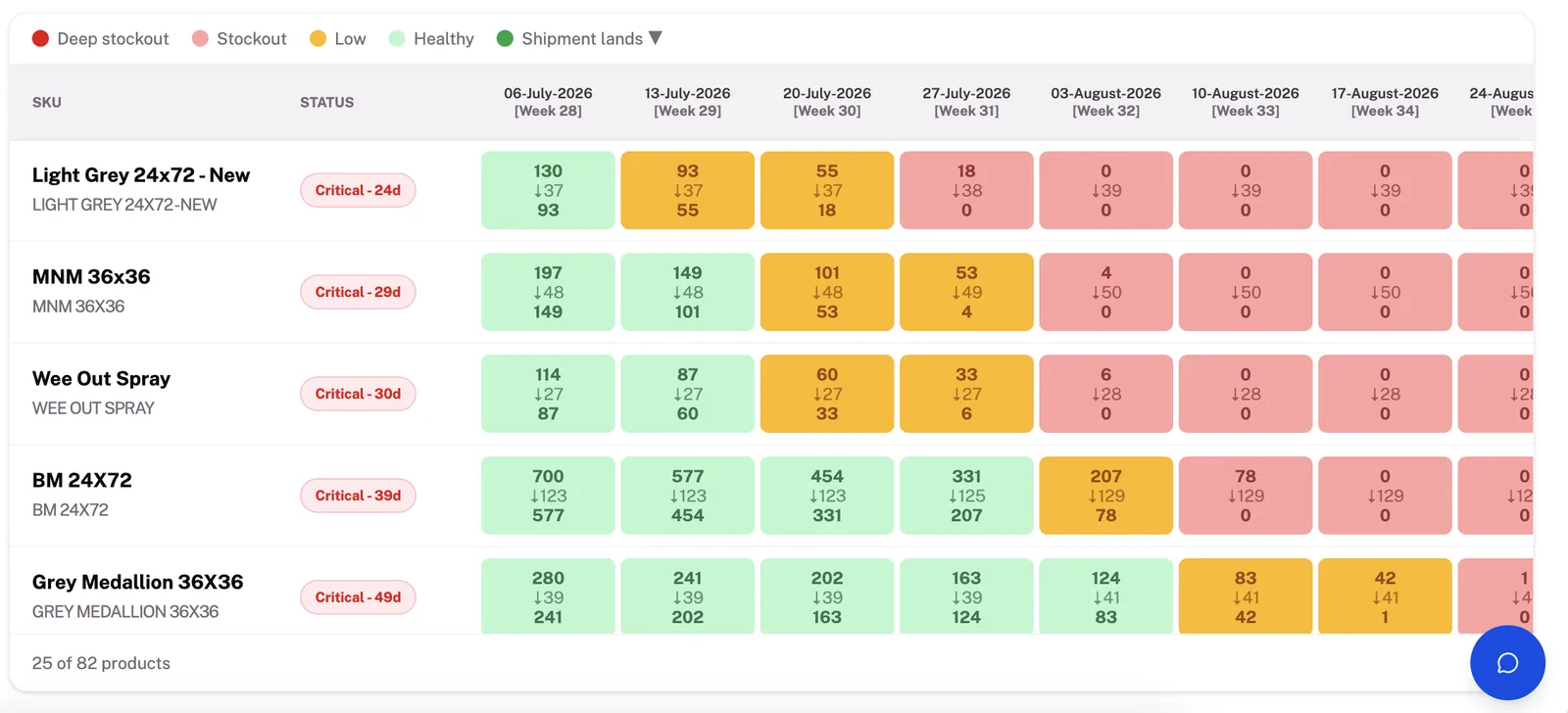
We set reorder points, safety stock buffers, and channel allocation rules so you're never sitting on deadstock or missing a sale because you ran dry.
2. Forecasting
No more spreadsheets, no more guesswork. Our ML models turn your sales history, seasonal patterns, and promo performance into numbers you can actually plan a quarter around.
3. Logistics
From ocean freight to last-mile delivery, we manage 3PL networks, direct-to-FBA shipments, and cross-docking. So your product ships on schedule and your landed costs stay predictable.
4. Supplier Coordination
We manage purchase orders, lead times, and production schedules end to end, keeping factories and freight forwarders in sync. So quality issues get caught before they ever ship.
5. Support That Doesn't Clock Out
E-commerce doesn't run on one time zone, so neither do we. A dedicated ops pod is reachable on Slack and email around the clock. Whether it's your morning or your supplier's in Asia.
The Roadmap: Getting From Spreadsheets to Automated
Switching to A2Z's ERP is built to happen with zero downtime for your live stores.
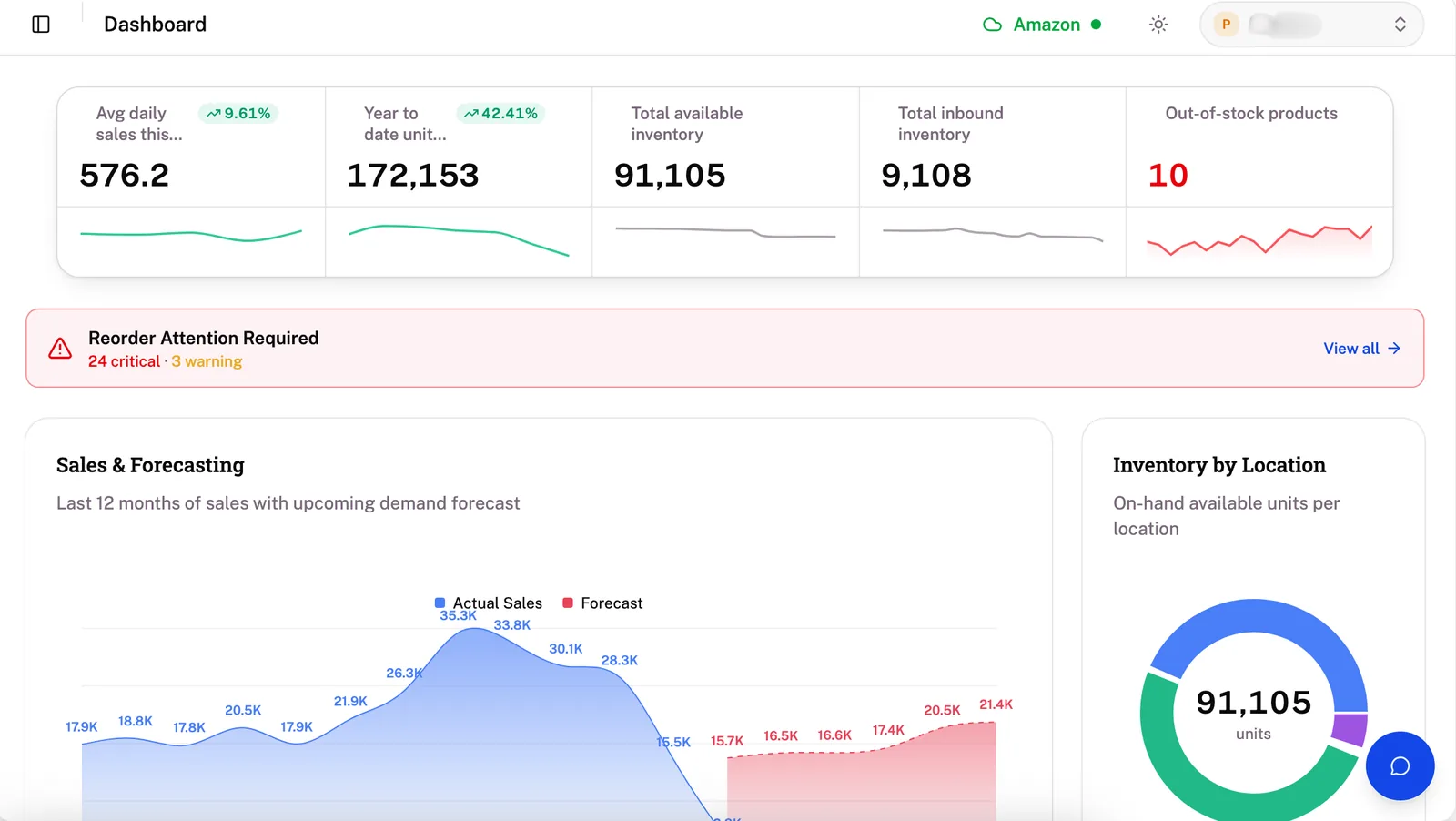
Direct data ingestion: Hand over your existing spreadsheets. Our data engineers clean, standardize, and map your SKU structure straight into the A2Z Supply Chain system.
API-level integration: We connect the ERP directly to Amazon Seller Central, Shopify, and your 3PL networks, creating one real-time source of truth.
Activating the forecasting engine: The system learns your sales velocity from historical data and starts generating predictive models almost immediately.
Supplier automation: Lead times and transit routes get loaded in, and the system begins recommending POs and tracking shipments on its own.