
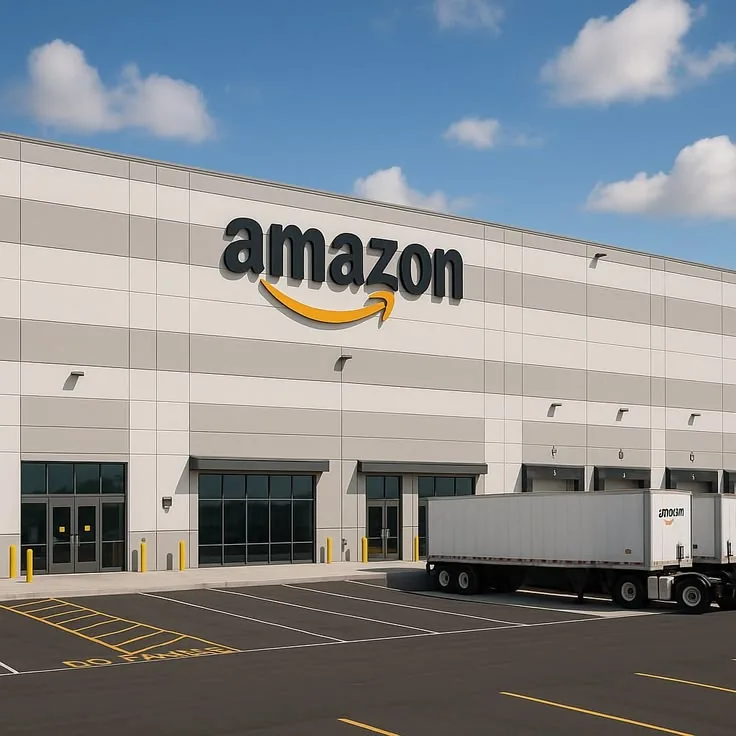
Amazon supply chain management: beating the new FBA fees
Quick answer: Amazon's inbound placement service fee and low-inventory-level fee penalize two opposite behaviors: shipping to one fulfillment center, and letting stock run too lean. Routing bulk inventory through AWD avoids the placement fee entirely, while automated replenishment keeps historical days of supply above Amazon's threshold without overstocking FBA directly.
Amazon changed the rules. It's no longer just about keeping listings active, it's about exactly how and where units get stored.
Amazon introduced a run of logistical penalties in recent years, including inbound placement service fees and low-inventory-level fees, and Amazon's own fee documentation confirms both are active parts of the current fee structure. Manage Amazon shipments the same way they were handled two years ago, and these surcharges will eat straight into gross margin. Modern Amazon supply chain management means treating inbound routing and inventory levels as a financial engineering problem, not just a logistics one. Here's how to protect cash flow against both fees.
Avoid the inbound placement fee trap
Amazon wants sellers doing its distribution work for it, and charges for the convenience of not doing so.
Create a shipping plan and send all inventory to one convenient fulfillment center, and Amazon applies an inbound placement service fee per unit. Avoiding it means selecting the Amazon-optimized shipment split, breaking a shipment into four or more separate shipments sent to different regions.
For small parcel delivery, splitting shipments raises baseline carrier costs. Routing bulk inventory through Amazon Warehousing and Distribution sidesteps that trade-off entirely. Inventory routed through AWD bypasses the inbound placement fee altogether, simplifying the freight strategy while protecting margin.
Evade the low-inventory-level fee
Running a hyper-lean, just-in-time supply chain used to be the smartest way to dodge FBA storage fees. Amazon closed that loophole.
Historical days of supply dropping below roughly 28 days, a threshold Amazon has adjusted before and may again, now triggers a low-inventory-level fee on every order fulfilled from that FNSKU. Letting FBA stock run too lean costs money, and so does overstocking FBA into long-term storage fees. The fix is precise automated replenishment: hold a deeper buffer of stock in a 3PL or AWD, and configure automatic daily drip-feeds into FBA, keeping days of supply above threshold without overpaying for prime shelf space.
Consolidate prep outside the Amazon network
Amazon offers to apply FNSKU labels, bubble wrap fragile items, and bag apparel at the fulfillment center. Using those services is usually a mistake, not a convenience.
Paying Amazon to prep products means paying premium US labor rates, and inventory sits in a receiving queue for days before it's even available for sale. Effective Amazon supply chain management pushes prep requirements upstream instead. Getting an overseas factory to print the FNSKU directly onto primary packaging is ideal. Where that's not possible, a cheaper local 3PL handling labeling before pallets touch the Amazon network is the next best option.
Optimize your Amazon operations with A2Z Supply Chain
Navigating Amazon's fee structure takes precise, ongoing math, not a one-time fix. A2Z Supply Chain actively manages the FBA pipeline to eliminate unnecessary surcharges.
Financial modeling: We audit shipping plans to calculate whether paying the inbound placement fee, splitting shipments, or routing through AWD is actually cheaper.
Inventory planning: We monitor historical days of supply daily, so low-inventory penalties never get triggered.
Supplier coordination: We enforce strict FBA prep compliance at the factory level, so goods arrive labeled and ready to sell immediately.
Logistics: We manage the flow of goods from factory into upstream storage buffers, automating the drip-feed into FBA.
Round-the-clock support: Our ops pod works 24/7 on Slack to monitor Seller Central for sudden fee changes or stranded inventory alerts.
Amazon's fee structure rewards precision and punishes defaults. The sellers losing margin to these fees usually aren't doing anything wrong, they're just running the same playbook that worked two years ago.